
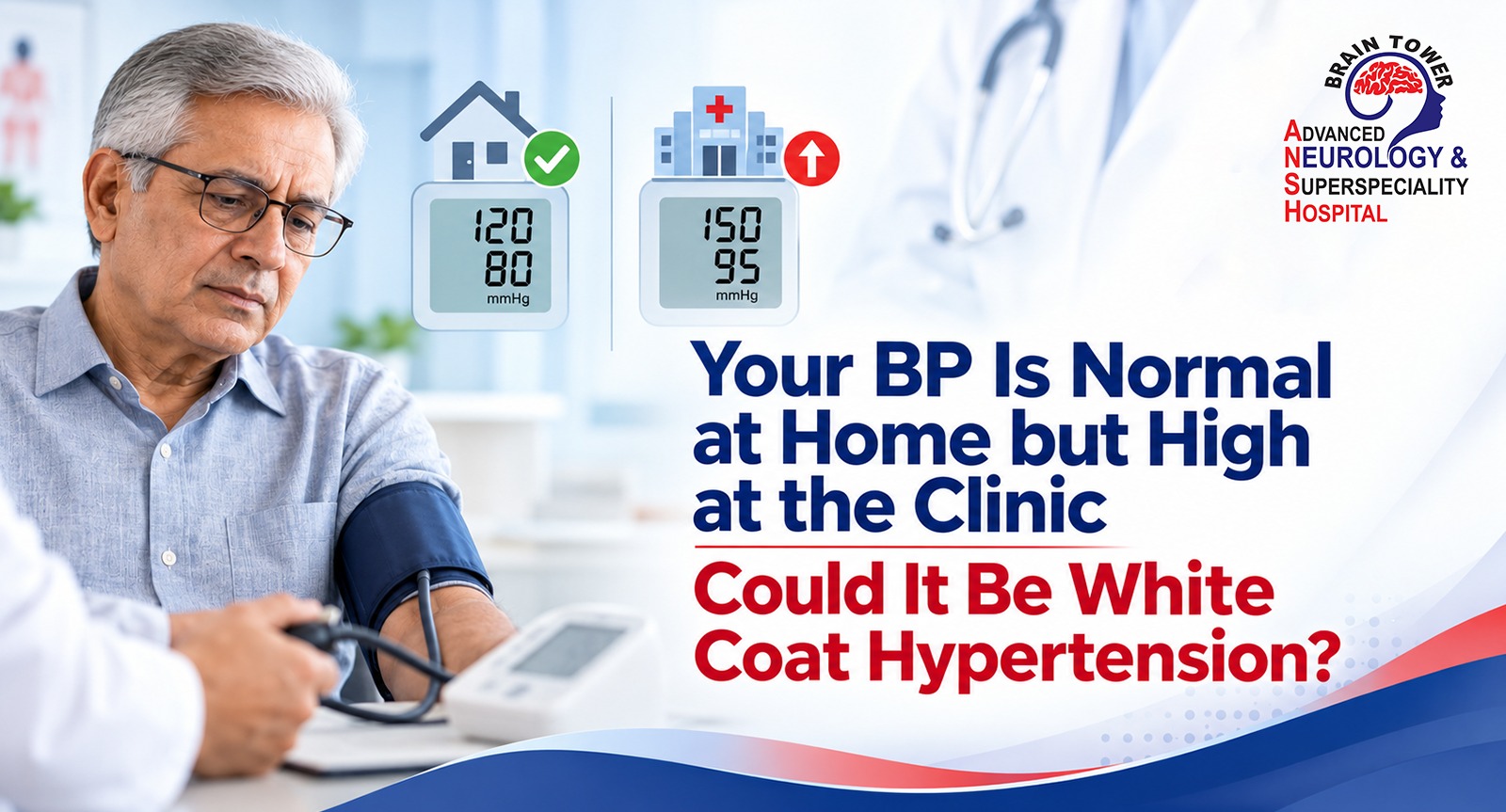
Have you ever checked your blood pressure at home and found it completely normal, only to see a higher number when you visit a doctor? You may wonder which reading to trust. While blood pressure naturally changes throughout the day, a noticeable difference between home and clinic readings can sometimes be related to a condition called white coat hypertension.
White coat hypertension refers to a situation where blood pressure is higher in a medical setting but appears normal outside the clinic. Stress, nervousness, or anxiety during a medical appointment can temporarily raise blood pressure. If you frequently notice this difference, speaking with a Blood Pressure Specialist in Jaipur can help you understand your readings and determine whether further monitoring is needed.
What Is White Coat Hypertension?
Blood pressure is not a fixed number. It can change depending on activity, emotions, sleep, food, caffeine, medications, and even the environment in which it is measured.
For some people, simply being in a doctor’s office can make them feel nervous. That temporary stress response may cause blood pressure to rise. If the reading is elevated at the clinic but normal when measured outside the clinic, it may be described as white coat hypertension.
This does not necessarily mean that the clinic reading is “wrong.” Rather, it provides information about your blood pressure at a particular moment. Home monitoring can provide additional information about what your blood pressure is like during your everyday routine.
Why Can Blood Pressure Rise at the Doctor’s Office?
Several factors can contribute to a higher clinic reading.
You may feel anxious about your health, the examination, test results, or simply being in a medical environment. Talking during the measurement, rushing into the appointment, climbing stairs beforehand, having a full bladder, or consuming caffeine shortly before the measurement can also affect reading.
Even small differences in how the blood pressure is measured can matter. Your posture, arm position, cuff size, and whether you have rested beforehand can influence the result.
For this reason, healthcare professionals generally consider more than one blood pressure reading when assessing a person’s overall blood pressure pattern.
Normal at Home Doesn’t Always Mean Everything Is Fine
It is reassuring to see normal readings at home, but they should not automatically be used to dismiss repeated high readings at the clinic.
There is another pattern called masked hypertension, where blood pressure appears normal in the clinic but is higher outside it. This is essentially the opposite pattern of white coat hypertension. Home monitoring and ambulatory blood pressure monitoring can help healthcare professionals identify these differences.
That is why keeping a record of your readings can be useful. Instead of relying on one measurement, your doctor can look at a series of readings and consider the overall pattern.
How Can You Check Your Blood Pressure Correctly at Home?
If you are monitoring your blood pressure at home, a Blood Pressure Specialist in Jaipur can guide you on the correct technique to ensure your readings are as accurate and reliable as possible.
The American Heart Association recommends using an automatic, validated, upper-arm cuff-style monitor. Wrist and finger monitors are generally less reliable. The cuff should also be the appropriate size for your arm.
Before checking your BP:
- Avoid exercise, smoking, and caffeinated drinks for about 30 minutes beforehand.
- Empty your bladder.
- Sit quietly for at least five minutes.
- Keep your back supported.
- Place both feet flat on the floor.
- Keep your arm supported at heart level.
- Place the cuff directly on your bare upper arm.
- Avoid talking or using your phone during the measurement.
- Take two readings about one minute apart and record them.
These simple steps can make your home readings more useful when you discuss them with your healthcare professional.
Keep a Blood Pressure Diary
If your home and clinic readings seem different, start maintaining a simple BP diary.
Write down the date, time, readings, and any relevant circumstances. For example, note whether you had coffee, exercised, felt stressed, slept poorly, or had taken your prescribed medication.
A series of readings provides a more useful picture than a single number. The American Heart Association notes that home monitoring can help confirm a diagnosis and evaluate whether treatment is working.
Bring your monitor to a medical appointment if possible. A healthcare professional can check whether you are using it correctly and compare its readings with the equipment used in the clinic.
Can Food and Lifestyle Affect Blood Pressure?
Absolutely. Blood pressure management is not only about medication. Everyday habits, including food choices, physical activity, body weight, sleep, and stress management, can all form part of a healthy lifestyle.
Diet deserves particular attention because eating patterns can influence overall cardiovascular health. A balanced approach may include vegetables, fruits in appropriate portions, whole grains, suitable protein sources, and sensible portion sizes while limiting excessive salt and highly processed foods.
However, dietary requirements are not identical for everyone. Someone with hypertension may also have diabetes, kidney disease, obesity, or digestive problems, which can change what an appropriate diet looks like.
How Nutrition Can Support Blood Pressure Management
This is where individualized nutritional guidance can be valuable.
ANS Hospital‘s Dietetics and Clinical Nutrition department focuses on improving health through appropriate food and nutrition. Its services include personalized diet plans, therapeutic nutrition, weight management programs, and nutritional counselling. Diet plans are designed around factors such as age, health condition, lifestyle, and medical needs.
The department also highlights guidance on food choices, portion control, meal timing, and sustainable healthy habits. This is important because managing blood pressure does not have to mean following an extreme diet. Long-term consistency is generally more practical than short-term restrictions.
Simple Meal Habits to Think About
If your blood pressure readings are a concern, consider making gradual improvements to your everyday meals.
Try to:
- Include more vegetables and fibre-rich foods.
- Choose minimally processed foods more often.
- Be mindful of added salt and very salty packaged foods.
- Maintain sensible portion sizes.
- Include appropriate protein with meals.
- Limit excessive sugary drinks and highly processed snacks.
- Maintain a healthy weight through sustainable eating habits.
- Stay physically active according to your healthcare professional’s advice.
- Avoid crash diets or extreme food restrictions.
The aim is not to completely change your eating habits overnight. Small changes that you can maintain over time can be easier to incorporate into daily life.
When Should You Speak to a Doctor?
If your clinic blood pressure is repeatedly elevated while your home readings remain normal, don’t simply assume it is white coat hypertension.
A Blood Pressure Specialist in Jaipur can review your readings, medical history, medications, lifestyle factors, and other risk factors. Depending on your situation, your healthcare professional may recommend structured home monitoring or ambulatory blood pressure monitoring to understand how your BP behaves outside the clinic.
You should also never stop or change prescribed blood pressure medication simply because your home readings appear normal. Discuss any changes with your healthcare professional first.
If your blood pressure is suddenly above 180/120 mm Hg, repeat the measurement after at least one minute. If it remains that high, contact a healthcare professional immediately. If very high blood pressure occurs together with symptoms such as chest pain, shortness of breath, weakness, numbness, vision changes, or difficulty speaking, seek emergency medical care.
Understanding the Difference Can Help You Take Better Care of Your Health
A normal BP reading at home and a high reading at the clinic do not necessarily contradict each other. They may reflect different circumstances and different moments.
The key is to look at the overall pattern rather than becoming overly concerned about one measurement. Accurate home monitoring, proper measurement technique, regular medical follow-up, balanced meals, healthy weight management, and appropriate professional guidance can all contribute to better blood pressure care.
If you are concerned about inconsistent readings, consulting a Blood Pressure Specialist in Jaipur can help you understand whether the difference may represent white coat hypertension or another blood pressure pattern.
With its focus on personalized diet planning, therapeutic nutrition, weight management, portion control, meal timing, and nutritional counselling, ANS Hospital can support a broader approach to healthy lifestyle and nutrition alongside appropriate medical care.