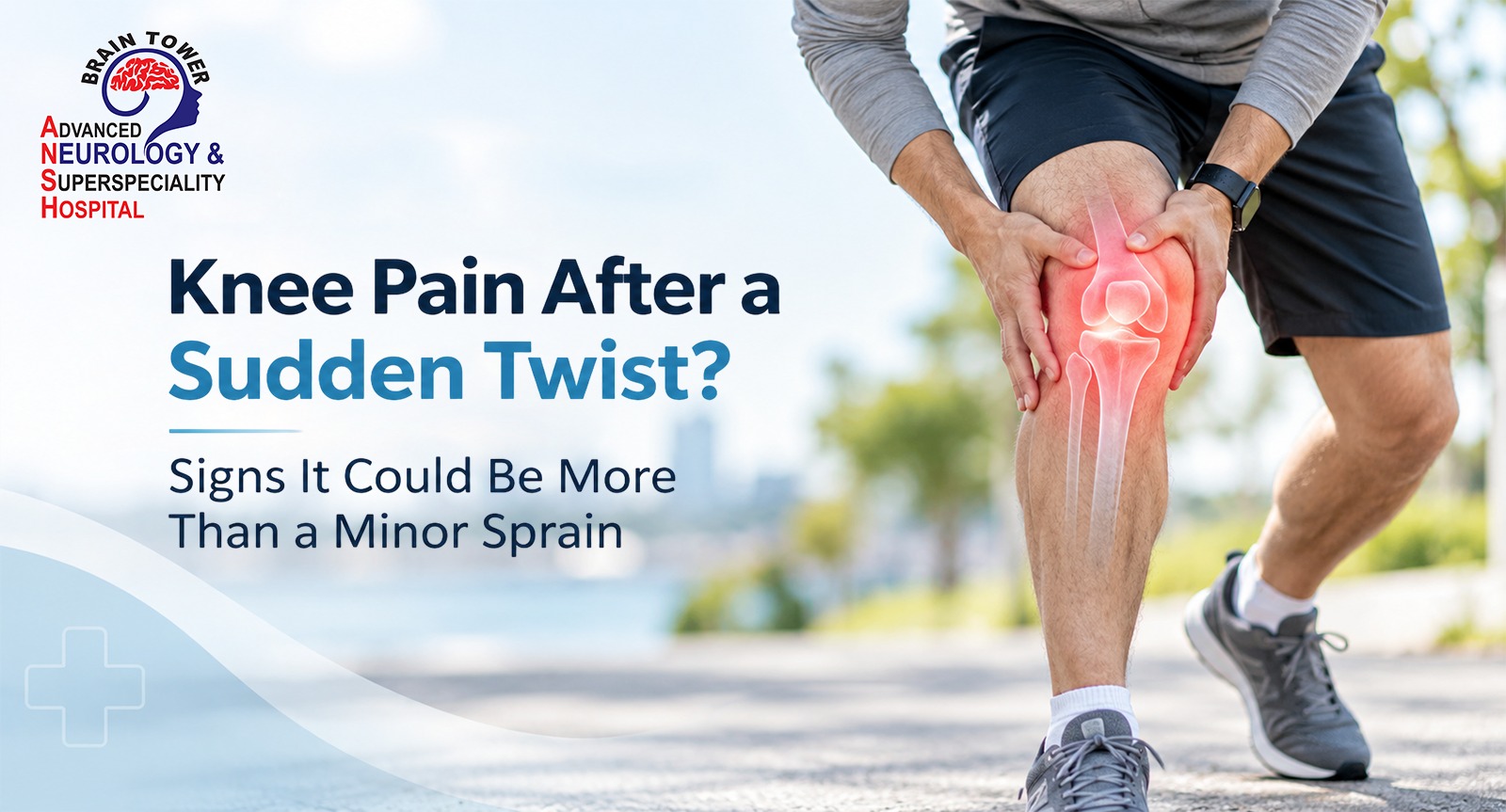
It happens in a split second. You pivot to dodge a scooter, land awkwardly during a cricket match, or twist your leg while stepping off a kerb. Your knee gives a sharp jolt, and maybe you even hear a pop. After a few minutes of limping, the pain eases a little, and you tell yourself it is just a minor sprain that will sort itself out.
Sometimes that is true. But a sudden twist can also damage the ligaments, cartilage, or bones inside the knee, and these injuries do not always announce themselves loudly. Knowing the warning signs, and finding the right knee pain treatment Jaipur doctors recommend, can protect you from months of lingering pain. In this guide, we explain how to tell a minor sprain from something more serious, and when professional knee pain treatment Jaipur specialists provide becomes important.
What Happens to the Knee During a Twisting Injury?
The knee is a hinge joint designed to bend and straighten. It is not built for sideways or rotational force, especially when your foot is planted on the ground and your body keeps turning. At that moment, the structures holding the joint together are stretched beyond their limit.
The result can range from a mild ligament strain to a complete tear. Because the knee contains several delicate parts, including four major ligaments, two cushioning menisci, cartilage, and the kneecap, a twist may injure more than one of them at the same time.
What a Minor Sprain Usually Looks Like
A minor sprain, which means slightly stretched ligament fibres, tends to follow a predictable pattern:
- Mild to moderate pain that gradually improves over a few days
- Slight swelling that settles within 48 to 72 hours
- Tenderness when pressing on one spot
- Ability to put weight on the leg, even if it feels sore
- Steady improvement with rest, ice, compression, and elevation
If your knee is clearly getting better each day, you are probably dealing with a mild strain. The trouble begins when your symptoms do not follow this pattern.
7 Signs It Could Be More Than a Minor Sprain
1. You Heard or Felt a “Pop”
A distinct popping sound at the moment of injury is a classic sign of a ligament tear, particularly the anterior cruciate ligament (ACL). Many people with ACL injuries report this sensation, followed quickly by swelling.
2. Rapid Swelling Within Hours
Swelling that appears within the first few hours often means bleeding inside the joint. This is more typical of ligament tears or fractures than a simple sprain. Slow, mild swelling over a day or two is less worrying.
3. The Knee Feels Unstable
If your knee feels wobbly, buckles when you walk, or seems to “give way” on stairs or uneven ground, the joint’s stabilising structures may be damaged. Instability should never be ignored, because repeated buckling can harm the cartilage and meniscus further.
4. Locking or Catching
A knee that catches, clicks painfully, or gets stuck in one position is often a sign of a meniscus tear. A torn piece of cartilage can interfere with smooth movement, and you may be unable to fully straighten the leg.
5. You Cannot Bear Weight
If putting weight on the leg is very painful, or you cannot take more than a few steps, a fracture or severe ligament injury is possible. This calls for prompt medical attention.
6. Pain Along the Joint Line
Tenderness along the inner or outer edge of the knee, especially when twisting or squatting, can point to meniscus damage rather than a simple ligament strain.
7. No Improvement After a Week
Even mild injuries should show clear progress within a few days. If the pain, stiffness, or swelling is unchanged or worsening after a week, something more than a basic sprain may be going on.
Why Delaying Care Can Cost You
Many people wait, hoping the pain will disappear. Unfortunately, untreated ligament and meniscus injuries can lead to chronic instability, repeated injury, and early arthritis. What could have been managed with physiotherapy or a minor procedure may eventually need more complex treatment.
Getting an accurate diagnosis early gives you more options and often a smoother recovery. A doctor will usually begin with a physical examination, checking for swelling, range of motion, and stability. Based on that, an X-ray may rule out fractures, while an MRI scan shows soft tissue damage in detail.
First Aid for a Twisted Knee
Until you can see a doctor, the following steps can help reduce pain and prevent further harm:
- Rest: Stop the activity immediately and avoid putting strain on the knee.
- Ice: Apply a cold pack wrapped in cloth for 15 to 20 minutes, several times a day.
- Compression: Use an elastic bandage to limit swelling, but not so tight that it causes numbness.
- Elevation: Keep your leg raised above heart level when resting.
- Avoid heat and massage in the first two days, as these can increase swelling.
Remember, first aid is only a temporary measure. It does not replace a proper medical assessment, especially if any of the warning signs above are present.
Treatment Options Depend on the Diagnosis
Not every knee injury needs surgery. Many respond well to physiotherapy, bracing, activity modification, and anti-inflammatory care. More serious tears, particularly complete ACL ruptures or large meniscus tears, may need arthroscopic surgery, a minimally invasive procedure with a shorter recovery time than traditional surgery.
Rehabilitation matters just as much as treatment itself. Strengthening the thigh and hip muscles, improving balance, and gradually returning to activity help protect the knee from future injury.
Choosing the Right Specialist
When your knee is hurting, the quality of care you choose matters. The most effective knee pain treatment Jaipur hospitals can offer starts with an experienced orthopaedic team, advanced diagnostic facilities, and a personalised recovery plan.
Look for doctors who explain your diagnosis clearly, discuss all options honestly, and support you through rehabilitation. Reliable knee pain treatment Jaipur patients trust will focus on treating the root cause of your injury, not just easing the pain for a few days.
Conclusion
A sudden twist can turn an ordinary day into a painful one, and while many knee injuries are minor, some hide serious damage. If you notice swelling, instability, locking, or pain that refuses to improve, do not wait it out. Visit the experienced orthopaedic specialists at ANS Hospital for a careful evaluation and a treatment plan designed to get you back on your feet safely and confidently.